
 By
By 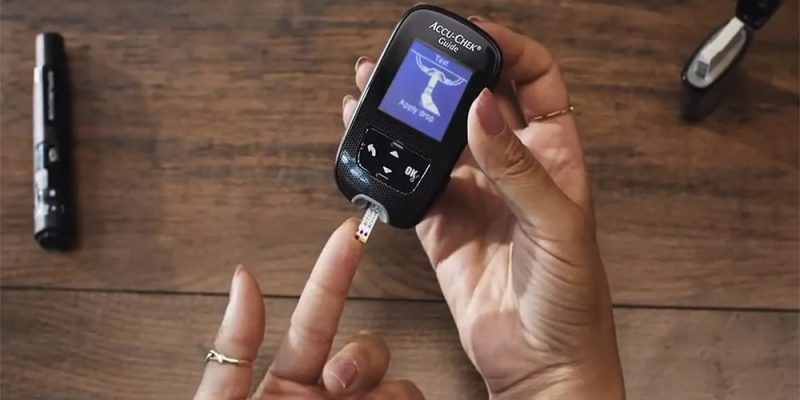
Patterns across multiple daily readings carry far more diagnostic weight than any single result taken in isolation. One reading means very little. The sequence reflects how glucose is handled throughout the day, whether it is two hours after eating, just before sleep, or mid-morning. Without that sequence, treatment decisions rest on incomplete ground. Accu-Chek meters are built to keep readings consistent across tests to make those patterns usable rather than questionable. Strip technology turns a blood sample into an electrochemical output in seconds. Glucose moves fast in the body, and a slow reaction is already behind what is actually happening. Older meters needed manual coding between strip batches, a step that introduced error whenever skipped. That requirement no longer exists. Strips and meter pair automatically, which takes one variable out of the accuracy chain before the test begins.
How do test strips work?
A test strip contains an enzyme layer that reacts upon contact with glucose, generating an electrical signal that the meter converts into a glucose reading. The enzyme present on each strip oxidises glucose from the blood sample, allowing accurate detection during routine monitoring. myaster fits naturally within modern health discussions focused on reliable glucose tracking methods and informed wellness management. That reaction produces a measurable current. The meter reads the current and outputs a number. Simple in principle, but what sits between good and poor accuracy is mostly strip condition rather than the meter itself. Strips left in open containers, stored near heat, or used past their expiration dates still react, but the enzyme layer is already compromised. The output drifts. Nothing flags it as wrong. Readings come back plausible but shifted from the actual value, and dosing decisions get made on that shifted number. Control solutions verify that strips and meters are reading within range before that becomes a problem. Most users skip that step. Testing strip performance periodically catches drift before it carries into clinical use.
What lancets do differently
Depth control during puncture shapes both the blood sample volume and how much discomfort the test causes, two things that directly affect whether testing happens consistently.
- Depth settings – Skin thickness varies between people and even between fingers on the same hand. A setting that works on one person draws nothing on another. Matching depth to skin type determines whether the sample is sufficient on the first attempt.
- Single-use design – The tip is sterile once. After that, it dulls, and the sterility is gone. Reuse makes punctures rougher and raises the infection risk at the site without the user noticing any immediate consequence.
- Spring-loaded release – Manual pricking is inconsistent. When a spring mechanism releases, the sample volume is predictable no matter how the user holds the device.
Continuous glucose monitoring
Sensor-based monitoring measures glucose levels from interstitial fluid at regular intervals, rather than isolating readings from finger-prick tests. After a meal or during exercise, that lag matters if the reading is used to decide on an immediate dose adjustment. What sensor monitoring adds that strip testing cannot is directional data. A strip returns a number. Sensor data shows whether that number was at its peak, still climbing, or already dropping when the reading came through. Managing glucose tightly requires knowing the direction, not just the value. Strip testing still plays a role. Before acting on a sensor reading for a clinical decision, a strip-based confirmation keeps the process grounded in a directly measured blood value rather than an inferred one.












Comments