
 By
By 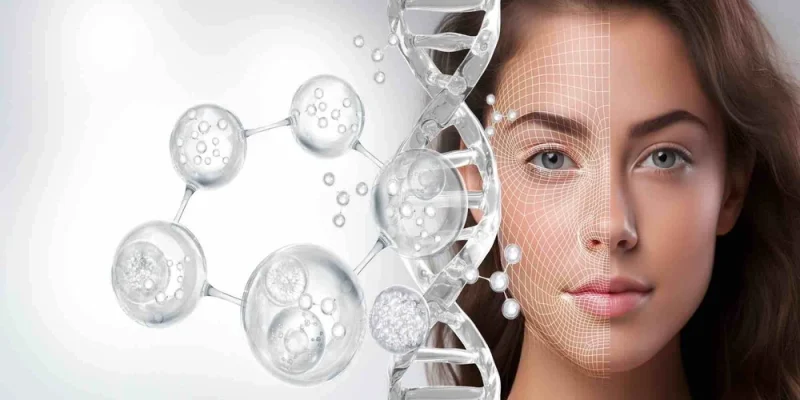
Signal peptides function by flagging newly made proteins for transport to a specific destination. GHK-Cu does not carry that kind of tag. What it carries is a copper(II) chelate formed between the histidine imidazole group and the lysine amine of a naturally occurring tripeptide. That chelate is what gives the ghk-cu canada peptide its reach into protein transport biology.
GHK binds copper and forms complexes that stimulate gene transcription by interacting with cell surface receptors and matrix components. There is no surface interaction. GHK-Cu is linked to collagen production, growth factor signalling, and tissue repair. Incorrect folding or misrouting of collagen molecules in the endoplasmic reticulum will prevent them from reaching the extracellular matrix. These transport conditions are set by GHK-Cu, not by protein tags.
How does protein transport connect to GHK-Cu?
Proteins are made inside cells in a defined sequence. Ribosomes produce them, endoplasmic reticulum modifies them, and the Golgi packages them, which are then secreted, embedded in membranes, or preserved in organelles. There is no shortcut there. Stages depend on one another.
This pathway is connected to GHK-Cu in two different ways. The secretory route is used to transport cargo and sort vesicles. It also delivers bioavailable copper that ATP7A and ATP7B draw from to manage copper distribution across compartments. Lysyl oxidase is a useful reference point here. This enzyme crosslinks collagen and elastin outside the cell but needs copper at its active site and has to travel the full secretory pathway to get there. GHK-Cu supports both the copper supply that activates it and the expression environment that drives its synthesis in the first place.
Copper form determines cellular outcome
There is a meaningful difference between free copper and coordinated copper inside a biological system. Free copper is redox-active. It generates hydroxyl radicals through reactions that damage membranes, proteins, and the transport machinery itself. Copper held within the GHK tripeptide reaches cells without that liability. It is bioavailable, stable, and compatible with the chaperone network that handles copper distribution inside cells.
That network operates through three main proteins, each with a fixed target.
- ATP7A and ATP7B consume copper as they travel through the secretory pathway to load secreted cuproenzymes.
- The CCS delivers copper to superoxide dismutase 1, protecting transport structures from oxidative damage.
- This enzyme transports copper to the mitochondrial inner membrane, where cytochrome c oxidase is assembled.
None of these chaperones manufactures copper. They distribute what is available. GHK-Cu expands the available pool in a form that each chaperone can use, which sustains transport accuracy for every copper-dependent protein moving through the system.
Repair outputs reveal transport function
Connective tissue remodelling gives the clearest picture of what GHK-Cu’s influence on protein transport actually produces. Collagen types I, III, and V each travel the full endoplasmic reticulum to Golgi to the extracellular space route before contributing to matrix structure. Fibronectin and decorin follow comparable secretory paths. GHK-Cu upregulates the genes encoding these proteins while sustaining the processing conditions that move them through each transport stage without error.
Matrix metalloproteinases add complexity. Secreted as inactive zymogens, activated extracellularly, and held in check by inhibitors, their function depends on transport compartments staying correctly defined throughout. GHK-Cu acts before any of that begins, at the gene expression level, where transport fidelity is either built in or missed entirely. The repair outputs that follow are a direct reflection of how well that upstream condition was met.











Comments