
 By
By 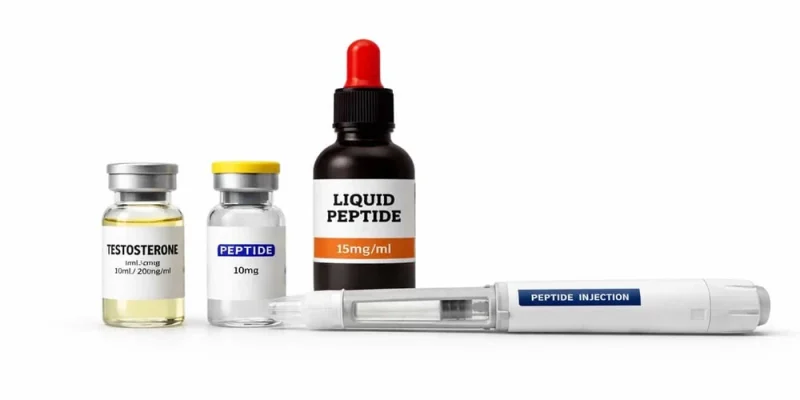
What does purity measurement mean?
A peptide vial that dissolves cleanly and looks right can still carry synthesis byproducts, incomplete chains, and residual reagents that no visual check will ever surface. Purity measurement exists because appearance tells nothing about composition. For the Koi Peptides Canada TB-500, what occupies space in a finished batch alongside the target compound is analytically as important as the compound itself.
Purity is expressed as the percentage of correctly synthesised target peptide against everything else the analysis can detect. Two per cent impurity sounds small until the contents of that two per cent are examined. Truncated sequences, where chain assembly stopped before the full 43-amino acid structure was completed, may be inactive or interfere with the activity of the intact peptide around them. Oxidised variants are harder to catch because their molecular weight sits close enough to the correct sequence that basic testing conflates them with the target. Their biological behaviour differs. Chromatographic separation distinguishes them. Appearance-based assessment does not.
What testing methods are applied?
High-performance liquid chromatography is the starting point. A sample moves through a column under pressure while a solvent mobile phase carries its components through at rates set by how each one interacts with the stationary phase inside. Slower travel means stronger interaction. Each component exists at a distinct time and registers as a separate peak. The target peptide’s share of total peak area produces the purity percentage.
Reverse-phase configuration handles peptide work because its hydrophobic stationary phase separates compounds based on polarity differences. TB-500 and a truncated variant sharing most of the same sequence will still elute at different times because their overall polarity profiles diverge enough for the column to distinguish them. That resolution matters when the contaminant and target are structurally close.
Mass spectrometry runs as a confirmatory step. It measures mass-to-charge ratios of detected ions and answers whether the compound behind the largest chromatographic peak actually matches TB-500’s molecular identity. Chromatography quantifies. Mass spectrometry confirms identity. Both are needed before the result carries weight.
Separate methods for separate contaminants
Chromatography does not catch everything. Residual solvents from solid-phase synthesis require gas chromatography because their volatility suits that separation method. Dimethylformamide and dichloromethane must fall below defined thresholds in the finished product, and standard HPLC conditions do not resolve them reliably.
- Trifluoroacetic acid from the peptide cleavage step persists in the final product at biologically relevant concentrations and requires separate quantification because reverse-phase HPLC does not isolate it distinctly.
- Heavy metals from synthesis reagents are detected through inductively coupled plasma mass spectrometry at parts-per-billion sensitivity, well below what chromatographic methods can resolve.
- Endotoxins from microbial contamination produce no chromatographic signal and are measured exclusively through the limulus amebocyte lysate assay, which remains the standard method for detecting them in research-grade peptide batches.
A batch cleared by HPLC alone has answered one question. A batch cleared across all four methods has answered the full set.
Batch documentation should report HPLC purity with supporting chromatogram data, mass spectrometry confirmation, and results from residual solvent and endotoxin testing. A high purity figure with incomplete supporting data leaves the gaps it does not report. Synthesis conditions vary between production runs, so prior batch results carry no weight for current stock. Each batch needs its own complete record, and that record needs to cover what was actually tested rather than what produced the most presentable number.










Comments