
 By
By 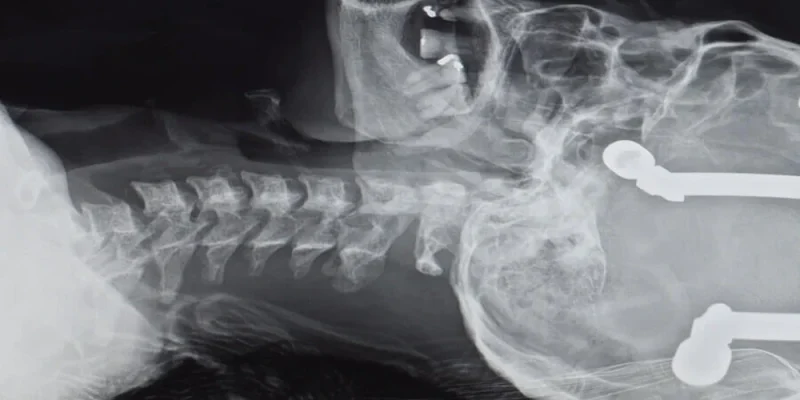
A concussion and a neck injury almost always happen at the same moment, but only one of them usually gets treated. That gap explains a lot of the cases Draper Spinal Care sees months after a car accident or a hit on the field, where headaches, fog, and dizziness have outlasted every timeline the patient was given. The brain scan came back clean, activity was gradually restored, and something still is not right.
The cervical spine is frequently the piece nobody examined, and it can generate nearly the entire post-concussion symptom list on its own.
How long should concussion symptoms actually last?
Most people recover within two to four weeks. The Amsterdam Consensus Statement on Concussion in Sport, published in the British Journal of Sports Medicine in 2023 and now the reference standard for concussion management, describes typical resolution within 2 weeks for adults and up to 4 weeks for children and adolescents.
Past that window, the picture changes. Estimates of how many people develop persisting symptoms after concussion vary by population and definition, with figures commonly falling somewhere between 10 and 30 percent. A concussion, for clarity, is a mild traumatic brain injury caused by force transmitted to the head, and it is a functional disturbance rather than a structural one, which is why CT and MRI are typically normal.
That normal scan is where many patients get stuck. It rules out bleeding and fracture. It does not evaluate joint motion, muscle guarding, or proprioceptive function in the neck, none of which show up on imaging.
Why does the neck get injured during a concussion?
Physics makes it nearly unavoidable. The forces required to produce a concussion are considerably larger than the forces required to strain cervical tissue, so any impact strong enough to concuss the brain has already exceeded the neck’s injury threshold on the way through.
Research on rear-end collisions has demonstrated cervical strain at accelerations in the range of a few g, while concussive impacts are generally studied in the range of tens to well over a hundred g. The head sits on a narrow, mobile column, and it is the C1 and C2 segments that absorb most of the rotational load. Whether the mechanism is a helmet-to-helmet collision, a fall from a bike, or a rear-end impact on I-15, the neck takes the same hit the head does.
Which lingering symptoms can come from the neck instead of the brain?
The overlap is nearly complete, which is what makes this so easy to miss. Symptoms that the cervical spine can independently produce include:
- Headache, particularly one that starts at the base of the skull and refers behind the eye, since C1 through C3 nerve input converges with the trigeminal nerve in the upper spinal cord
- Dizziness and unsteadiness driven by faulty position signals from the deep suboccipital muscles
- Blurred vision, difficulty tracking a moving target, and trouble with screens
- Light and sound sensitivity
- Fatigue and concentration problems tied to the constant effort of resolving conflicting sensory input
A practical clue: if symptoms reliably change with head and neck position, or worsen after sustained desk work, the cervical spine is likely contributing. Pure cognitive symptoms that persist without any positional pattern point elsewhere.
Is there evidence that treating the neck helps?
Yes, and the most cited evidence is a randomized controlled trial by Schneider and colleagues published in the British Journal of Sports Medicine in 2014. Athletes with persistent dizziness, headache, and neck pain after concussion received either cervical spine treatment combined with vestibular rehabilitation or a control program. Within 8 weeks, 73 percent of the treatment group was medically cleared to return to sport, compared with 7 percent of controls.
The sample was small, and larger replication is still needed. The finding has nonetheless shifted how persisting symptoms are approached, and it supports addressing the neck alongside vestibular and visual rehabilitation rather than waiting the brain out.
Current guidance has also moved away from extended rest. The Amsterdam consensus recommends a brief period of relative rest lasting 24 to 48 hours, followed by gradual reintroduction of activity and sub-symptom threshold aerobic exercise, since prolonged inactivity tends to slow recovery rather than speed it.
What does a cervical evaluation at Draper Spinal Care involve?
Assessment focuses on upper cervical alignment and motion, then on how well the neck is reporting position to the brain. That includes joint position error testing, where a head-mounted laser measures how accurately someone can return the head to a memorized target with eyes closed, and provocation tests that reproduce symptoms using neck movement while the vestibular system is held constant.
Care is deliberately low-force in this population. Someone whose sensory processing is already irritable does not tolerate aggressive rotational technique well, and gentle upper cervical correction paired with graded eye-head coordination work is better matched to the problem. Most patients are reassessed at four to six weeks to determine whether the cervical contribution is resolving.
Certain signs mean going to an emergency department rather than a clinic. Worsening or severe headache, repeated vomiting, seizure, unequal pupils, slurred speech, weakness, or increasing confusion after a head injury all require immediate medical evaluation.
Recovery that stalls past a month is not a sign you simply need more patience. It usually means something specific has gone unexamined, and the neck is the most common candidate. If your headaches shift with head position or your dizziness has outlived a clean scan, an upper cervical assessment at Draper Spinal Care is a reasonable next step toward finding out what is still driving it.











Comments